
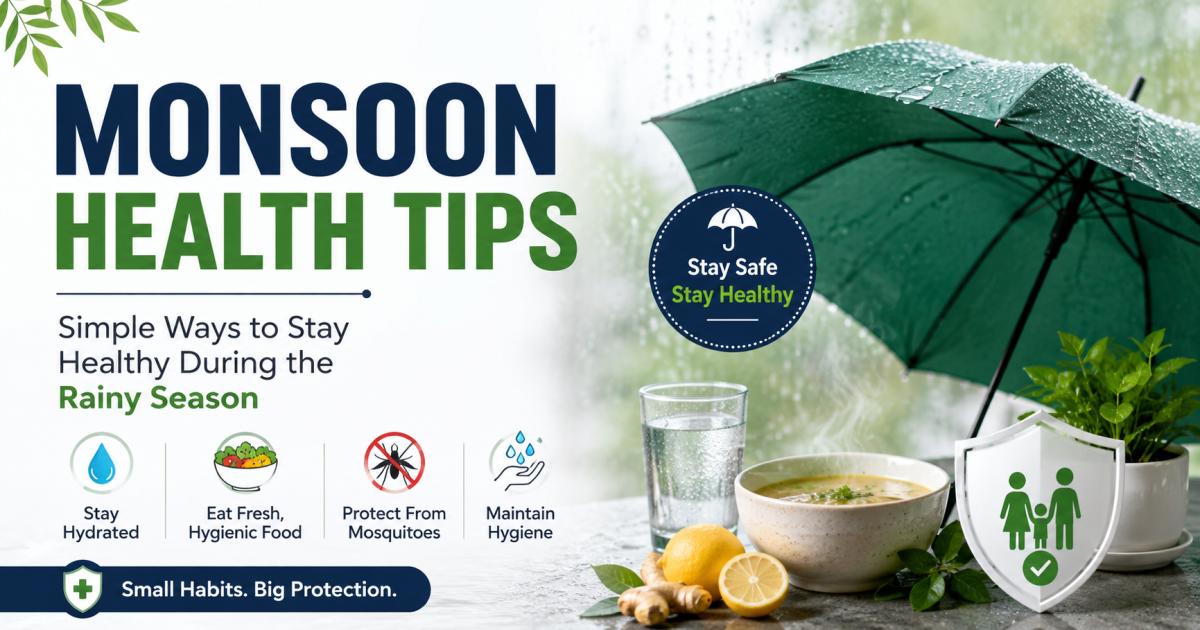
Stay healthy during the rainy season with simple monsoon health tips covering hydration, food hygiene, mosquito protection, infection prevention, skincare, exercise, and more.
Monsoon Health Tips: Simple Ways to StayHealthy During the Rainy Season
The first rain after a long, hot summer feels like a relief. The air cools
down, the streets smell fresh, and everyone in Hyderabad breathes a little easier.
But along with the relief, monsoon also brings its own set of health
challenges. Water gets contaminated more easily, mosquitoes breed faster, and
infections spread quicker than usual.
None of this means you need to stay indoors and avoid the rain altogether. A
few simple, consistent habits are usually enough to keep your family healthy
through the season. Here are some practical monsoon health tips that are easy
to follow, even with a busy daily routine.
1. Stay Hydrated:
Most people cut down on water intake during monsoon simply because they don't
feel as thirsty as they do in summer. That's a mistake. Your body still needs
the same amount of water to function properly, rain or shine.
* Keep drinking water through the day, even if you don't feel thirsty.
* Prefer boiled or filtered water over water straight from the tap, especially
if your area has seen waterlogging.
* If you're out and about, carry your own water bottle instead of relying on
roadside sources.
* Warm water, herbal teas, or a simple soup can be a comforting way to stay
hydrated when it's cool and rainy outside.
Safe drinking water is one of the most basic rainy season health tips, but it's
also the one people tend to overlook.
2. Eat Fresh and Hygienic Food:
That plate of hot pakoras during a rainy evening is hard to resist, and there's
nothing wrong with enjoying it once in a while. The real issue is how the food
is prepared and stored.
* Choose freshly cooked, hot food over anything that's been sitting out for a
while.
* Wash fruits and vegetables thoroughly under running water before cooking or
eating them raw.
* Be cautious with street food during monsoon — if you do want to try it,
pick vendors who cook fresh in front of you rather than food that's pre-cut or
exposed to the open air.
* Avoid cut fruit or juices sold on the street, as they attract dust and flies
quickly in humid weather.
Good food hygiene isn't about giving up your favourite monsoon snacks. It's
about being a little more selective about where and how they're made.
3. Take Care of Your Digestion:
A lot of monsoon-related illnesses start in the stomach. Contaminated water and
food are common causes of loose motions, food poisoning, and typhoid during
this season, since bacteria and viruses spread more easily in damp, humid
conditions.
* Avoid ice in drinks unless you're sure it's made from safe water.
* Don't eat food that smells or looks even slightly off — when in doubt, skip
it.
* If your child or an elderly family member has a sensitive stomach, stick to
simple, home-cooked meals during heavy rain days.
* Keep oral rehydration solution (ORS) at home, just in case someone in the
family gets an upset stomach.
If digestive issues continue for more than a day or two, it's worth getting
checked rather than waiting it out. Amor Hospitals' Gastroenterology department
in Kukatpally is equipped to diagnose and treat these issues quickly.
4. Protect Yourself From Mosquitoes:
Stagnant water is the single biggest reason mosquito-borne diseases spike during
monsoon. Dengue, malaria, and chikungunya all trace back to mosquitoes breeding
in still water — and it doesn't take much water for them to lay eggs.
* Check your home for stagnant water in flower pots, coolers, buckets, or
discarded containers, and empty them regularly.
* Cover water storage tanks and drums properly.
* Use mosquito nets, repellents, or vaporisers, especially during early morning
and evening hours when mosquitoes are most active.
* Wearing full-sleeved clothes in the evening can help, particularly for
children playing outdoors.
This is one of the most important monsoon disease prevention steps, and most of
it comes down to simply not letting water sit around your home.
5.
Keep Your Surroundings Dry and Clean:
Damp corners, wet floors, and waterlogged areas around the house create the
perfect environment for germs and mosquitoes alike.
* Wipe down wet floors immediately to prevent slipping and mould growth.
* Clear blocked drains around your house so water doesn't collect.
* Keep dustbins covered and clear out garbage regularly, since damp waste
attracts pests faster.
* Air out your home when the rain lets up — a little sunlight and ventilation
go a long way in reducing dampness indoors.
A clean, dry home isn't just more comfortable during monsoon; it directly cuts
down your family's exposure to infections.
6. Prevent Common Infections:
Colds, flu, and viral fevers travel fast during monsoon, often through simple
contact — a handshake, a shared cup, or a crowded bus.
* Wash your hands with soap regularly, especially before eating and after
coming in from outside.
* Carry a hand sanitiser for times when soap and water aren't available.
* Avoid close contact with anyone who has a cold, cough, or fever at home or
work.
* If you're unwell yourself, wearing a mask around others can help prevent
spreading it further.
These are small habits, but they make a real difference when infections are
going around.
7. Take Care of Your Skin and Feet:
Wet clothes and damp shoes are more than just uncomfortable — they're one of
the most common causes of fungal infections during monsoon.
* Change out of wet clothes as soon as you get home, rather than letting them
dry on your body.
* Dry your feet thoroughly after getting caught in the rain, particularly
between the toes.
* Avoid wearing the same damp shoes two days in a row — let them air out
completely.
* If you notice itching, redness, or peeling skin, especially on the feet,
treat it early rather than ignoring it.
A little attention to your skin and feet during monsoon prevents infections
that can otherwise take weeks to clear up.
8.
Exercise Safely During Monsoon:
Skipping exercise altogether isn't necessary just because it's raining, but
outdoor workouts do need some adjustment.
* On heavy rain days, switch to indoor exercises like yoga, stretching, or
bodyweight workouts at home.
* If you walk or jog outdoors, avoid routes with waterlogging or slippery
surfaces.
* Gym-goers should be mindful of humidity and stay hydrated even indoors.
* A short walk after the rain has cleared is often safer than exercising while
it's actively pouring.
Staying active still matters for overall health — it just needs to adapt to
the weather.
9.
Get Enough Sleep and Eat a Balanced Diet:
Your immune system does a lot of quiet work in the background, and it depends
heavily on sleep and nutrition. This becomes even more important during
monsoon, when your body is dealing with more exposure to infections than usual.
* Aim for 7–8 hours of sleep, and try to keep a consistent sleep schedule.
* Include seasonal fruits, vegetables, and enough protein in your meals.
* Warm, home-cooked food is easier on digestion than heavy, oily meals during
this season.
* Ginger, turmeric, and garlic — common in Indian kitchens — are often used
to support immunity, though they're not a substitute for medical treatment when
you're actually unwell.
Good sleep and balanced meals won't stop you from ever falling sick, but they
do help your body recover faster when you do.
10.
When Should You See a Doctor?
Most monsoon-related issues are mild and clear up with rest and basic care. But
certain symptoms shouldn't be brushed aside:
* Fever that persists for more than two to three days
* Severe vomiting or diarrhoea, or signs of dehydration like dizziness and
reduced urination
* Difficulty breathing or persistent chest discomfort
* Skin infections that are spreading or not improving
* Any symptom that keeps getting worse instead of better
If you notice any of these, it's best to get medical attention rather than wait
it out at home. Amor Hospitals in Kukatpally has 24/7 emergency care along with
specialists across General Medicine, Gastroenterology, Pulmonology, and
Paediatrics, so you can get the right care without delay.
Conclusion:
Monsoon doesn't have to mean a season of falling sick. Most of these rainy
season precautions are things you're probably already doing in some form —
drinking clean water, washing your hands, keeping your home tidy. The key is being
a little more consistent about them until the rains pass. If you or anyone in
your family does fall ill, don't wait too long to get it checked. A quick
consultation early on is almost always easier than dealing with a bigger
problem later.
Frequently
Asked Questions
1. What are the most common diseases during monsoon?
Dengue, malaria, typhoid, viral fever, and stomach infections are among the
most common monsoon diseases, largely caused by contaminated water and mosquito
breeding.
2. How can I purify drinking water at home during monsoon?
Boiling water for a few minutes is the simplest method. You can also use a good
quality water filter or purifier, especially if your area faces waterlogging.
3. Is it safe to eat street food during the rainy season?
It's best to be cautious. Choose vendors who cook food fresh in front of you,
and avoid pre-cut fruits, juices, and food that's been sitting out for a while.
4. How can I protect my child from monsoon infections?
Keep their hands clean, avoid letting them play in stagnant water, ensure they
change out of wet clothes quickly, and keep an eye on any fever or stomach
upset.
5. When should I visit a hospital for monsoon-related illness?
If fever lasts more than two to three days, or if there's severe vomiting,
diarrhoea, breathing difficulty, or worsening symptoms, it's time to see a
doctor rather than wait at home.
For consultations related to digestive issues, fever, respiratory problems, or
child health during monsoon, you can reach out to Amor Hospitals, Kukatpally,
Hyderabad, at
+91 901 0827 279, or book an appointment
through [www.amorhospitals.com](https://www.amorhospitals.com/contact-us).