
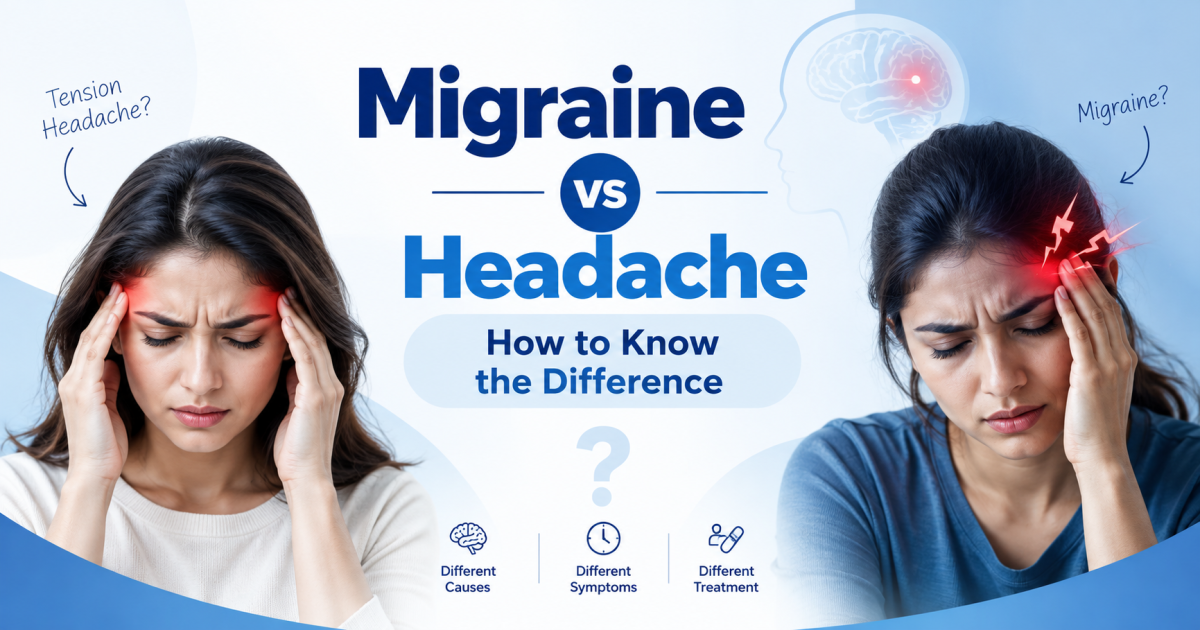
Learn the key differences between migraine and headache, including symptoms, triggers, duration, treatment options, and when you should see a doctor.
If you've ever reached for a painkiller and told a colleague
"I have a bad headache," you're not alone — most of us use the word
"headache" for almost any kind of pain in the head, whether it's a
dull ache after a long day at the screen or something far more intense that
forces us to lie down in a dark room. But not all head pain is the same, and
migraine is a good example of how different two "headaches" can
actually be.
Migraine is often mistaken for just a severe headache, but
it's actually a distinct neurological condition with its own set of triggers,
symptoms and patterns. Knowing the difference matters, because it changes how
you manage the pain, when you should worry, and when it's time to get it
checked by a doctor. This article breaks down what separates an ordinary
headache from a migraine, what to watch for, and when it's worth booking a
consultation with a specialist.
A headache is simply pain or discomfort in the head, scalp,
or neck area. It's not a disease in itself — it's a symptom, and it can be
caused by dozens of different things: stress, poor posture, eye strain,
dehydration, lack of sleep, sinus congestion, or even something as ordinary as
skipping a meal.
Doctors generally divide headaches into two broad
categories. Primary headaches are the ones where the headache itself is the
main problem, not a sign of some other disease — tension-type headaches,
migraine, and cluster headaches fall here. Secondary headaches happen as a
result of another underlying issue, such as an infection, sinus problem,
injury, or in rare cases something more serious that needs urgent evaluation.
Tension-type headaches are the most common type most people
experience — the kind that feels like a tight band squeezing around the head.
They're usually mild to moderate and don't typically stop you from going about
your day.
Migraine, on the other hand, isn't just "a bad
headache." It's a neurological condition where the brain and nervous
system react in a specific way, often involving changes in blood vessels and
nerve signaling in the brain. This is why migraine attacks tend to bring a
whole cluster of symptoms beyond just pain — nausea, sensitivity to light, and
sometimes visual disturbances before the pain even starts.
Migraine often runs in families, and many people who get
migraines can recall a parent or sibling who also deals with them. The pain
itself tends to be more intense and disabling than a typical headache, often
making it hard to work, concentrate, or even keep your eyes open comfortably.
Some people get migraines once or twice a year; others deal with them several
times a month.
Migraine vs Headache: What's the Difference?
Here's a simple comparison to help you understand how
migraine and an ordinary tension-type headache typically differ. Keep in mind
that individual experiences can vary quite a bit.
|
Feature |
Tension-Type Headache |
Migraine |
|
Pain type |
Dull, pressing, or tight — like a band around the head |
Throbbing or pulsating |
|
Pain location |
Usually both sides of the head |
Often one side, though it can affect both |
|
Pain intensity |
Mild to moderate |
Moderate to severe |
|
Duration |
30 minutes to a few hours (sometimes longer) |
4 hours to 72 hours if untreated |
|
Nausea or vomiting |
Rare |
Common |
|
Sensitivity to light/sound |
Uncommon or mild |
Common, often both together |
|
Aura (visual or sensory changes before pain) |
Not present |
Occurs in some people, not all |
|
Effect of physical activity |
Doesn't usually worsen with movement |
Often worsens with routine activity like climbing stairs
or bending down |
This table is a general guide, not a diagnostic tool —
plenty of people have symptoms that don't fit neatly into either column, which
is exactly why a proper evaluation matters if your headaches are frequent or
troubling.
Common Symptoms of a Migraine:
Migraine doesn't look the same for everyone, but there are
some symptoms that tend to show up often:
- Throbbing
or pulsating pain, usually on one side of the head
- Nausea,
sometimes with vomiting
- Increased
sensitivity to light, sound, or even smells
- Aura
— temporary visual disturbances like flashing lights, zigzag lines, or
blind spots, which some people experience shortly before the headache
begins
- Worsening
pain with movement or physical activity
- Fatigue
or feeling "wiped out" for a day or two after the attack passes
- In
some cases, mild tingling or numbness in the face or hands
Not everyone gets aura, and not everyone gets nausea with
every attack. Migraine symptoms can also change over time for the same person —
an attack in your twenties might look quite different from one you get years
later.
What Does
a Typical Tension Headache Feel Like?
Tension-type headaches tend to feel more like a steady, dull
pressure — many people describe it as a tight band or a heavy weight sitting
across the forehead or around the back of the head and neck. It's usually not
the kind of pain that stops you from working or doing daily tasks, though it
can certainly be uncomfortable and distracting.
Unlike migraine, tension headaches rarely come with nausea
or vomiting, and while bright light or loud noise might feel mildly unpleasant,
it's not usually the significant sensitivity seen with migraine. These
headaches are often linked to stress, poor sleep, long hours at a desk, or
muscle tension in the neck and shoulders.
What Can
Trigger a Migraine?
Migraine triggers vary quite a bit from person to person,
and what sets off an attack for one person might have no effect on someone
else. That said, some common triggers people report include:
- Stress,
or even the "let-down" period right after a stressful phase ends
- Poor
or irregular sleep — both too little sleep and oversleeping
- Skipping
meals or going too long without eating
- Dehydration
- Hormonal
changes, particularly around menstrual cycles in women
- Certain
foods or drinks, such as aged cheese, processed meats, or alcohol
(especially red wine) for some individuals
- Too
much caffeine, or sudden caffeine withdrawal
- Strong
smells, bright or flickering lights, and weather changes for some people
It's worth noting that these are common triggers, not
universal ones. Many people with migraine find it helpful to keep a simple
diary of their attacks to spot personal patterns over time — what triggers your
migraine might be completely different from what triggers someone else's.
How Are
Migraines and Headaches Diagnosed?
There's no single blood test that confirms migraine. Doctors
typically diagnose it by talking through your symptoms in detail — how the pain
feels, where it's located, how long it lasts, what makes it better or worse,
and whether you notice any warning signs beforehand. Your medical history and
any family history of migraine are also useful pieces of the puzzle.
A physical and neurological examination is usually part of
the process too, to rule out other causes. In most cases, if your headache
pattern is fairly typical and there are no red-flag symptoms, further tests
aren't necessary. However, if your doctor notices something unusual — a sudden
change in your headache pattern, an abnormal exam finding, or symptoms that
raise concern — they may recommend imaging such as an MRI or CT scan, or blood
tests, just to be thorough and rule out other conditions.
If you're dealing with headaches that keep coming back or
don't quite fit a typical pattern, it's worth getting evaluated by a physician.
The General Medicine
department at Amor Hospitals is a good starting point for this kind of
assessment, and can guide you toward a specialist if needed.
How Are
Migraines Treated?
Migraine management usually involves a combination of
approaches rather than a single fix, and treatment plans are generally tailored
to how often and how severely someone experiences attacks. Common elements
include:
- Resting
in a quiet, dark room during an attack
- Identifying
and, where possible, avoiding personal triggers
- Keeping
a consistent sleep schedule
- Eating
regular meals rather than skipping them
- Staying
adequately hydrated through the day
- Medicines
recommended by a doctor to relieve pain during an attack, or to prevent
attacks in people who get them frequently or severely
For people who experience frequent or particularly disabling
migraines, doctors sometimes suggest preventive treatment aimed at reducing how
often attacks happen. The right approach really depends on the individual,
which is why self-treating recurring migraines without medical guidance often
isn't the most effective route.
When Should You See a Doctor for a Headache?
Occasional mild headaches are common and usually nothing to
worry about. But it's worth getting checked by a doctor if:
- Your
headaches are becoming more frequent or more severe over time
- Over-the-counter
pain relief isn't helping the way it used to
- Headaches
are interfering with your work, sleep, or daily routine
- You're
relying on painkillers several times a week
- The
pattern or character of your headache has changed noticeably
- You're
experiencing headaches for the first time after the age of 50
A doctor can help figure out what type of headache you're
dealing with and whether it needs further evaluation or a specific treatment
plan.
When Is a
Headache an Emergency?
Most headaches aren't dangerous, but certain warning signs
mean you should seek urgent medical attention right away:
- A
sudden, extremely severe headache that comes on abruptly — often described
as "the worst headache of your life"
- Headache
following a significant head injury
- Headache
accompanied by confusion, slurred speech, weakness, or numbness on one
side of the body
- Loss
of consciousness or fainting along with the headache
- Headache
with fever and a stiff neck
- Sudden
vision changes, double vision, or loss of vision
- A
headache that keeps getting worse over hours or days without relief
If you or someone around you experiences any of these, don't
wait it out — get to an emergency room as soon as possible.
Can You
Prevent Migraines and Frequent Headaches?
While migraines can't always be prevented entirely, there
are lifestyle habits that genuinely help reduce how often they occur for many
people:
- Sticking
to a regular sleep routine, even on weekends
- Eating
meals at consistent times and not skipping them
- Staying
well hydrated throughout the day
- Managing
stress through activities that work for you, whether that's exercise,
breathing techniques, or simply taking breaks
- Limiting
or being mindful of caffeine and alcohol intake
- Keeping
a headache diary to identify your personal triggers
- Following
through with any preventive treatment your doctor has recommended, if you
have frequent attacks
These steps won't guarantee you'll never get another
migraine, but for many people they do make attacks less frequent or less severe
over time.
Frequently
Asked Questions
1. Is every severe headache a migraine? No. Headaches
can be severe for many reasons — infections, dehydration, eye strain, or other
underlying issues — without being migraine. Migraine has its own specific
pattern of symptoms, so severity alone isn't enough to tell the two apart.
2. How long does a migraine usually last? A typical
migraine attack lasts anywhere from 4 to 72 hours if untreated, though this
varies from person to person and from one attack to another.
3. Can migraine happen without nausea? Yes. While
nausea is common with migraine, not everyone experiences it with every attack,
or at all.
4. Can stress cause migraine? Stress is one of the
most commonly reported migraine triggers, though it doesn't affect everyone the
same way, and some people notice attacks after stress eases up rather than
during it.
5. Can dehydration cause headaches? Yes, dehydration
is a well-known headache trigger and can also bring on migraine attacks in
people who are prone to them.
6. When should I see a doctor for frequent headaches?
If your headaches are happening often, getting worse, or affecting your daily
life, it's a good idea to get evaluated rather than just managing them with
over-the-counter medicine indefinitely.
7. Can migraines be treated permanently? There's
currently no permanent cure for migraine, but with the right combination of
trigger management, lifestyle adjustments, and medical treatment, many people
see a significant reduction in how often and how badly they're affected.
8. Can children or teenagers get migraines? Yes,
migraine can affect children and teenagers, though it sometimes presents a
little differently in younger people, such as shorter attacks or more prominent
stomach symptoms.
If your headaches feel different from what you're used to,
keep coming back, or are affecting your daily life, it's worth getting them
properly evaluated rather than guessing. The General Medicine team at
Amor Hospitals can help identify what's causing your headaches and guide
you toward the right treatment plan.