
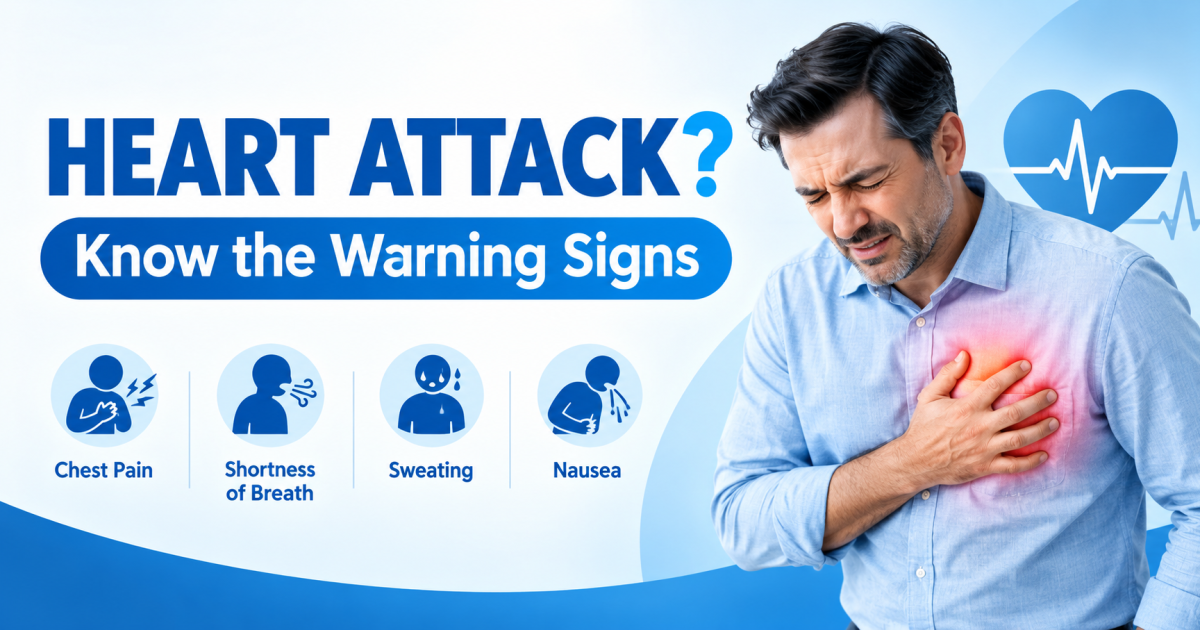
Learn the common and lesser-known warning signs of a heart attack, including chest pain, breathlessness, sweating, nausea and unusual fatigue, and know when to seek emergency care.
Most people picture a heart attack as sudden, crushing chest pain that drops someone to the floor. Real life is often quieter than that. Many patients later describe a dull pressure in the chest, a strange breathlessness while climbing stairs, cold sweat for no clear reason, or a tiredness that felt "different" from normal fatigue. Some had mild discomfort that came and went for hours before they finally sought help. This is exactly why heart attack warning signs get missed — they don't always look dramatic, and they don't always match what we've seen in movies.
Knowing
what to watch for, and acting on it without delay, genuinely changes outcomes.
This article walks through the common and less common signs of heart attack
symptoms, how they can differ between men and women, and what to do if you or
someone near you experiences them.
The Major Warning Signs of aHeart Attack:
A heart
attack happens when blood flow to part of the heart muscle gets blocked,
usually by a clot in a narrowed artery. The symptoms that follow are the body's
way of signalling that the heart isn't getting enough oxygen. The early signs
of heart attack can include:
- Chest pressure, tightness or
discomfort —
often described as squeezing, heaviness, or a band around the chest rather
than sharp pain
- Pain spreading to the arm,
shoulder, back, neck or jaw — this radiating discomfort is a classic clue
doctors look for
- Shortness of breath —with or without chest
discomfort
- Cold sweating that comes on suddenly
- Nausea or vomiting
- Dizziness or
light-headedness
- Unusual or sudden tiredness, sometimes noticed days
before the actual event
- Fast or irregular heartbeat
- A general feeling of
anxiety or a sense that something is seriously wrong
None of
these symptoms on their own confirms a heart attack, and not everyone gets all
of them. But when a few appear together, especially chest discomfort with
breathlessness or sweating, it needs urgent attention.
Symptoms Can Vary From Person to Person:
Two
people having a heart attack at the same time can describe completely different
experiences. One might have severe chest pain radiating down the left arm.
Another might just feel unusually breathless and drained, with barely any chest
discomfort at all. Age, diabetes, and general health also affect how symptoms
show up — diabetics, for instance, sometimes have blunted pain signals and may
notice fatigue or breathlessness more than pain. This variability is one reason
heart attacks get missed or dismissed as indigestion, muscle strain, or
anxiety.
Heart Attack Symptoms in Women:
Women
don't always get the textbook chest-clutching pain. It's fairly common for
heart attack symptoms in women to show up as unusual fatigue that builds over a
day or two, nausea, shortness of breath, or discomfort in the back or jaw
rather than the chest. Some women describe it as feeling like bad indigestion.
Because these signs seem unrelated to the heart, women sometimes wait longer
before getting checked — which is a real problem, since faster treatment leads
to better recovery.
The more
commonly recognised pattern — sudden, heavy chest pain, sweating, and pain down
the left arm — tends to appear more often in men. That said, this isn't a
strict rule. Men can also experience the subtler signs seen more often in
women, and women can have the classic crushing chest pain too. The overlap
matters more than the stereotype: if something feels off and doesn't go away,
it's worth getting evaluated regardless of gender.
What Should You Do If You Suspect
a Heart Attack?
This is
the part that saves lives, so it's worth being direct about it:
Don't
wait to see if the symptoms pass on their own. Don't try to "push
through" chest discomfort or convince yourself it's just gas or stress. If
you or someone with you has symptoms that suggest a heart attack, call for
emergency medical help right away rather than driving yourself to the hospital
— an ambulance team can start monitoring and treatment on the way, which a private
car cannot. If symptoms have lasted more than a few minutes, treat it as an
emergency rather than waiting them out at home.
The
reason speed matters so much is simple: during a heart attack, heart muscle is
being starved of oxygen with every passing minute. The longer the blockage
stays untreated, the more permanent damage occurs. This is why hospitals with
round-the-clock cardiac emergency facilities matter. Amor Hospitals provides
24×7 emergency cardiac care with a Cath Lab available at all hours, so that
patients with acute myocardial infarction can be taken in for Primary PCI — a
procedure to open the blocked artery — without losing critical time. Coronary
ICU support is also in place for patients who need close monitoring after
treatment.
When Should You See a Cardiologist?
You don't
need to wait for an emergency to talk to a heart specialist. Consider booking a
consultation with a cardiologist in Hyderabad if you notice:
- Recurring chest discomfort,
even if mild
- Breathlessness during
routine activity
- Palpitations or a racing
heartbeat
- Episodes of dizziness or
fainting
It's also
worth getting your heart checked proactively if you have high blood pressure,
high cholesterol, diabetes, a smoking habit, obesity, or a family history of
heart disease. These are the risk factors that quietly raise your chances of a
future cardiac event, and catching them early through general and preventive
cardiology gives you more options and better outcomes.
Prevention Matters More Than
People Realise:
A lot of
heart attack risk is genuinely within your control. Keeping blood pressure and
cholesterol in check, managing diabetes properly, not smoking, staying
physically active, eating reasonably well, and maintaining a healthy weight all
reduce your risk meaningfully. Regular check-ups — including an ECG or
echocardiography if your doctor recommends it — help catch problems before they
turn into emergencies.
Amor
Hospitals in Kukatpally, Hyderabad offers cardiac care across this entire
spectrum — from preventive and general cardiology to interventional procedures
like angioplasty and stenting, cardiac imaging such as ECG, echocardiography,
stress testing, coronary CT and cardiac MRI, heart failure management,
electrophysiology and arrhythmia care with pacemaker and ICD/CRT services, and
cardiac rehabilitation for patients recovering after a cardiac event. A
multidisciplinary heart team works together on both routine and emergency
cases.
1. What
are the earliest warning signs of a heart attack?
Early signs often include chest pressure or tightness, breathlessness, cold
sweating, nausea, dizziness, and unusual fatigue that feels different from
normal tiredness. Some people also notice discomfort spreading to the arm,
shoulder, back, neck or jaw. These symptoms can appear gradually or suddenly,
and any combination of them needs urgent medical evaluation rather than waiting
to see if they pass.
2. How do
heart attack symptoms differ in women compared to men?
Men more often report classic symptoms like sudden chest pain radiating down
the left arm. Women are more likely to experience subtler signs — unusual
fatigue, nausea, shortness of breath, or discomfort in the back or jaw that can
feel like indigestion. There's overlap between the two, so neither pattern
should be relied on to rule a heart attack out.
3. What
should you do immediately if you suspect a heart attack?
Call for emergency medical help right away rather than waiting for symptoms to
ease on their own. Avoid driving yourself if an ambulance is available, since
paramedics can begin monitoring and treatment immediately. Every minute of
delay increases the risk of lasting heart muscle damage, so acting fast matters
more than trying to be certain first.
4. Can
you have a heart attack without chest pain?
Yes. Some people, especially women and those with diabetes, have heart attacks
with little or no chest pain. Symptoms like breathlessness, unexplained
fatigue, nausea, dizziness, or discomfort in the jaw or back can appear
instead. This is one reason heart attacks are sometimes missed, and why any
unusual combination of symptoms deserves prompt medical attention.
5. When
should you consult a cardiologist instead of waiting for an emergency?
If you have recurring chest discomfort, breathlessness during routine activity,
palpitations, or episodes of dizziness, it's worth seeing a cardiologist even
without an emergency. The same applies if you have risk factors like high blood
pressure, high cholesterol, diabetes, obesity, smoking, or a family history of
heart disease — catching issues early gives you far more treatment options.