
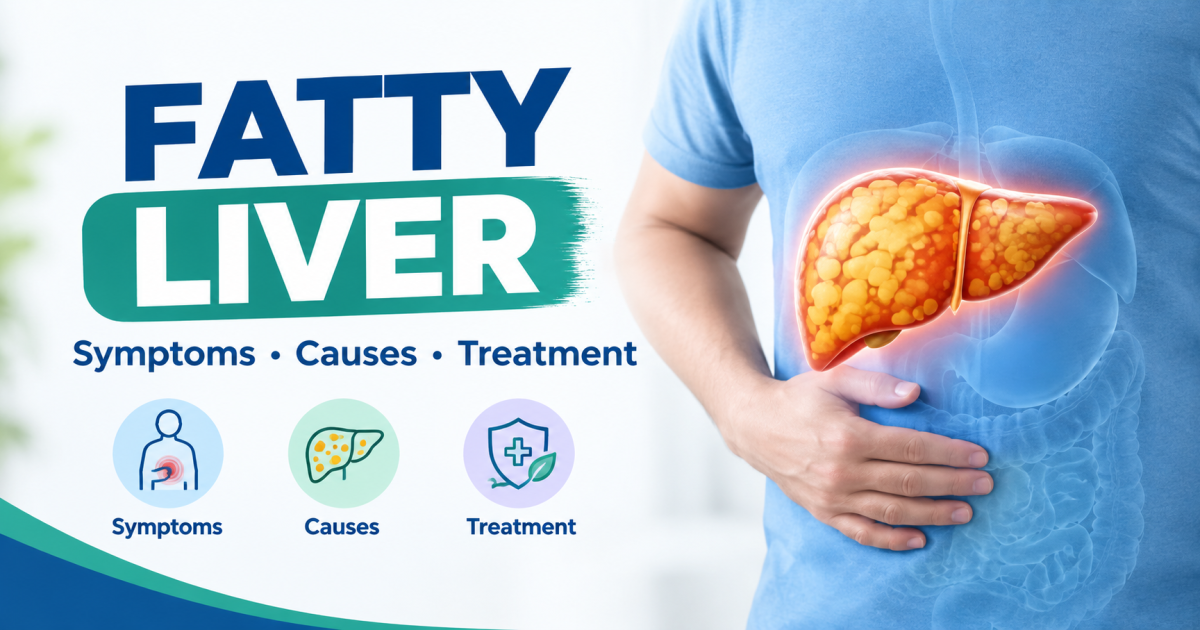
Short Description: Learn about fatty liver symptoms, causes, stages and treatment, including diet, exercise, diagnosis and lifestyle changes to support better liver health.
Most
people find out about fatty liver by accident. You go for a routine health
check, maybe because your company insists on it or your father had a heart
scare. The ultrasound report comes back with a line like "Grade 1 fatty
liver," and you're left wondering what it means and whether you should be
worried.
You feel
fine, so it's easy to ignore. But fatty liver is common, especially in India,
and it deserves a little attention. Here's what it is, why it happens, and what
you can do about it.
Your
liver normally holds a small amount of fat. Fatty liver, also called hepatic
steatosis, means fat makes up more than about 5 to 10 percent of the liver's
weight. This is now called fatty liver disease when it's causing problems, and
it's very common.
Doctors
now split it into two broad groups. MASLD (metabolic
dysfunction-associated steatotic liver disease, earlier called NAFLD) is linked
to weight, blood sugar and cholesterol problems. Alcohol-associated liver
disease is caused by drinking. Some people have a bit of both.
What happens inside the liver?
When fat
builds up, the liver cells get stressed. In many people that's where it stops,
and the liver keeps working normally. In others, the extra fat triggers
inflammation. Over years, repeated inflammation can lead to scarring, and scar
tissue doesn't do the work that healthy liver tissue does.
Is fatty liver always dangerous?
No. Many
people live with simple fatty liver for years without it causing serious harm.
But it's a sign that something in your metabolism needs attention, and it's
linked to a higher risk of diabetes and heart disease. Think of it as a
warning, not an emergency.
Fatty Liver Symptoms:
The
honest answer is that most people have none, especially early on. That's why
it's found on scans done for other reasons.
When
symptoms do show up, they're vague:
- Tiredness that doesn't go
away with rest
- A dull heaviness or mild
discomfort in the upper right side of the abdomen
- A general feeling of being
unwell
None of
these confirm fatty liver, because they could come from a dozen other things.
And having no symptoms doesn't mean your liver is fine. Only tests can tell
you.
If the
disease progresses to advanced scarring, the picture changes. Yellowing of the
eyes or skin (jaundice), swelling in the legs or belly, easy bruising, and
confusion can appear. These are late signs, not typical fatty liver symptoms.
Fatty Liver Causes and Risk Factors:
Fatty
liver causes are mostly tied to how the body handles sugar and fat. The main
ones:
- Overweight and obesity, particularly fat around
the belly. Indians tend to store fat around the waist even at a modest
weight.
- Insulin resistance, where the body doesn't
respond well to insulin and the liver ends up making and storing more fat.
- Type 2 diabetes, which and fatty liver
often go together.
- High cholesterol and
triglycerides
- Poor diet, especially lots of sugar,
sweets, sugary drinks and refined carbohydrates like maida and white rice
in large portions
- Lack of physical activity
- Alcohol, which can damage the liver
directly, whatever your weight
- Certain medications (some steroids and a few
other drugs) and conditions such as PCOS, thyroid problems or rapid weight
loss
That's
why a thin person can have fatty liver too. Weight is only one piece of the
puzzle.
Fatty Liver Stages:
Doctors
usually describe four stages, but please don't read this as a conveyor belt.
Many people stay at stage 1 for life.
Stage 1:
Simple fatty liver (steatosis). Fat is present, but there's little or no
inflammation. This is the most common stage and the most reversible.
Stage 2:
Steatohepatitis. Fat plus
inflammation and liver cell injury. In MASLD this is called MASH. It's more
concerning, but still often improves with sustained lifestyle change.
Stage 3:
Fibrosis. Ongoing
inflammation leaves scar tissue. Early fibrosis can improve or stabilise if the
cause is dealt with, though it needs proper medical follow-up.
Stage 4:
Cirrhosis. The
liver is extensively scarred and hardened. This damage is generally not
reversible, but good treatment can prevent it from worsening and reduce
complications.
Only a
minority of people with fatty liver reach the later stages. The risk is higher
with diabetes, significant obesity, heavy drinking, or metabolic problems that
stay uncontrolled.
It
usually starts with a conversation: your weight, diet, alcohol, medicines,
family history, and whether you have diabetes or high cholesterol.
Then come
tests:
- Blood tests, including liver enzymes
(SGOT/SGPT), blood sugar, and a lipid profile. Liver enzymes can be
completely normal in someone with fatty liver, and they can be raised for
other reasons, so they never tell the full story.
- Ultrasound, which shows fat in the
liver but can't tell you how much scarring there is.
- Fibrosis assessment, using scores calculated
from blood tests, or elastography (FibroScan), a painless test that
measures liver stiffness to estimate scarring.
- Liver biopsy, where a tiny sample is
taken, is kept for uncertain cases or when other causes need to be ruled
out.
Fatty Liver Treatment:
There's
no magic pill, and anyone selling you one should be treated with suspicion. The
core of fatty liver treatment is fixing what's driving it.
Weight
loss, if you're carrying extra. Losing around 7 to 10 percent of body weight can
reduce liver fat and inflammation noticeably. That's around 6 to 8 kg for
someone weighing 80 kg. Slow and steady works better than crash diets.
Managing
other conditions.
Controlling diabetes, cholesterol and blood pressure matters as much as
anything else. Some diabetes medicines also help the liver, but that's your
doctor's call.
Alcohol. If your fatty liver is
metabolic, cutting down or stopping is usually advised. If there's fibrosis or
cirrhosis, alcohol should be avoided entirely.
Medicines. Newer medicines for the inflamed
stage exist, but they're prescribed only to selected patients after proper
assessment. Please don't self-medicate or rely on supplements or herbal
remedies. Some of them can actually harm the liver.
Regular
monitoring.
Follow-up tests every so often show whether things are improving.
Foods to Eat and Foods to Limit With Fatty Liver:
You don't
need a perfect diet. You need one you can stick to at home, at weddings and on
busy weekdays.
Foods to
eat more of
- Vegetables: palak, methi, lauki, beans,
cabbage, cauliflower, carrots
- Fruits, in sensible
portions:
papaya, guava, apple, orange, a bowl at a time rather than a whole plate
- Whole grains: jowar, ragi, bajra, brown
rice, whole wheat roti
- Dal and legumes: moong, toor, chana, rajma,
sprouts
- Nuts and seeds: a small handful of almonds,
walnuts or groundnuts, or a spoon of flax or pumpkin seeds
- Fish and lean protein: grilled or curried fish
(not deep-fried), eggs, chicken without heavy gravy
- Curd or buttermilk, if it suits you,
preferably unsweetened
Foods to
limit
- Cold drinks, packaged juices
and sweetened chai or coffee
- Mithai, gulab jamun, jalebi,
and other sweets
- Bakery items: biscuits,
puffs, cakes, white bread
- Deep-fried snacks: samosa,
pakora, chips, puri
- Large portions of white
rice, maida and other refined carbohydrates
- Packaged and heavily
processed foods
- Alcohol
Fruit
juice is worth a special mention. It feels healthy, but a glass can carry more
sugar than you'd expect. Eating the whole fruit is better.
Exercise
reduces liver fat even when the number on the scale barely changes. You don't
need a gym membership.
- Brisk walking is the easiest place to
start. Aim for around 150 minutes a week, so 30 minutes on most days.
- Cycling or swimming are good if walking is hard
on your knees.
- Strength training two or three days a week,
even with light weights or body weight, helps your body handle sugar
better.
- General activity counts too: taking stairs,
walking after dinner, less sitting.
Consistency
beats intensity. A person who walks every day for a year will do better than
someone who does punishing workouts for three weeks and stops.
When Should You See a Gastroenterologist?
Consider
seeing a specialist if:
- Fatty liver shows up on your
ultrasound
- Your liver tests stay
abnormal on repeat checks
- You have unexplained
tiredness or ongoing abdominal discomfort
- You have diabetes, obesity
or high cholesterol along with fatty liver
Get
medical help urgently if you notice jaundice, swelling in your abdomen,
vomiting blood, black stools, or confusion or unusual drowsiness. These can
signal advanced liver disease or bleeding and shouldn't wait.
If you're
looking for a liver specialist or a gastroenterologist for fatty liver in
Hyderabad, the gastroenterology team at Amor Hospitals is one
place to start. They can assess how much your liver is affected and plan
follow-up.
Fatty
liver reversal is realistic in the early stages. When someone loses weight,
eats better, moves more and gets blood sugar under control, liver fat often
drops significantly, and inflammation can settle too.
Once
scarring has set in, things are less straightforward. Early fibrosis may
improve or at least stop advancing. Cirrhosis can't be undone, but it can be
managed with regular follow-up and treatment to protect the liver and catch
complications early. That's why finding it sooner rather than later makes such
a difference.
Is fatty
liver dangerous?
Usually not in the early stage, but it shouldn't be ignored. In some people it
progresses to inflammation, scarring and, rarely, cirrhosis.
Can fatty
liver be reversed?
Early fatty liver often improves a lot with weight loss, diet changes and
exercise. Advanced scarring needs medical management.
Can a
thin person have fatty liver?
Yes. Genetics, belly fat, insulin resistance, poor diet, and inactivity can
cause it even at a normal weight.
Can fatty
liver cause stomach pain?
Sometimes a dull ache or heaviness in the upper right abdomen, but many people
feel nothing. Stomach pain has many other causes, so get it checked.
Is fatty
liver caused only by alcohol?
No. Most fatty liver in India is linked to metabolic factors like weight,
diabetes and cholesterol, though alcohol can cause it too.
What
should I eat if I have fatty liver?
Vegetables, dal, whole grains, sensible fruit portions, nuts, fish or lean
protein, and curd. Cut back on sugary drinks, sweets, fried food and refined
carbs.
Is
walking enough to reduce fatty liver?
Regular brisk walking helps a lot, especially alongside diet changes. Adding
some strength training gives more benefit.
Can fatty
liver become cirrhosis?
It can in a small number of people, mostly when inflammation and scarring
continue for years. Most people with fatty liver never reach that stage.
Which
doctor treats fatty liver?
A gastroenterologist or hepatologist (liver specialist). Your family doctor or
diabetologist may also be involved.
Fatty
liver is common, and for most people it's manageable, especially when it's
caught early. The scan result isn't a reason to panic, but it isn't something
to shrug off either.
Small,
steady changes in what you eat and how much you move can make a real
difference. Talk your reports over with a qualified gastroenterologist rather
than depending on internet advice, this article included. A short consultation
now is a lot easier than dealing with a bigger problem later.